Vocations
Welcome to our Vocations Page! We are delighted that you are interested in finding out more about us.
There are different vocations to which we are called: marriage, priesthood, deaconate, religious life, single life. All are gifts from God. We cherish our religious life as monastic women, committed to living in community under the Rule of Benedict. In this we give witness to the love of Christ and all creation by living an ordinary life that is transformed by our devotion to God and being Christ for one another.
If you are wondering if you might be called by God to religious life, consider the following;
- Are you seeking God?
- Do you have a generous heart?
- Are you willing to make changes and grow in holiness as a Benedictine?
- Are you healthy in mind and body?
To become a sister, the qualifications are:
- Single woman
- 21 years and older
- Seeking and yearning for God
- In good health
- Willing to live under a Rule
- Willing to live in a community with other women
What is Benedictine Monastic Life?
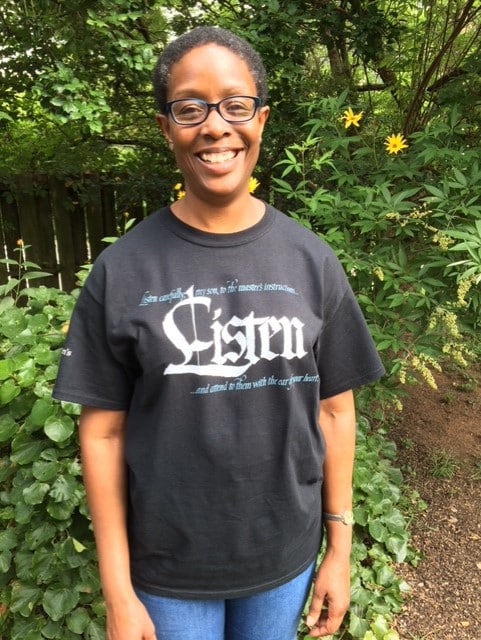
“ Listen with the ear of your heart” (Rule of Benedict Prologue) ).“There is a great difference between listening and hearing” G.K. Chesterton
“….run on the path of God’s commandments, our hearts overflowing with the inexpressible delights of love” (Rule of Benedict, Prologue 49). Monasticism is a life that emphasizes prayer, community, and work. Our motto is Ora et Labora, that is Latin for Prayer and Work.
Our life is a total commitment and a call to holiness. We strive for this always. What we seek is to cherish Christ above all else and to live our Rule with other sisters as witnesses of the love of Christ. We see Christ in each other and all with whom we encount.er and we attempt each day to be Christ for others. We take vows of obedience, stability and ‘conversatio’ or fidelity to the monastic way of life.
Prayer Forms of Benedictine Spirituality
- Liturgy of the Hours
- Lectio Divina or prayerful reading of Scripture
- Eucharist
- Using the Gospel and the Rule of Benedict as our guide
- Listening to one another
- Communal participation in Mass and Liturgy of the Hours
- Attending to our God within us and in others
Lectio Divina
Lectio Divina is a meditative prayer, allowing God to speak through God’s living Word. It has been described as a way to “feast on God’s Word”, so we will use that analogy as we walk through the four steps of this prayer.
“Seek in reading and you will find in meditation; knock in prayer and it will be opened to you in contemplation.” ~St. John of the Cross explaining the four steps of Lectio Divina
The Christian form of Lectio Divina was first introduced by St. Gregory of Nyssa (c 330- 395), and encouraged by St. Benedict of Nursia (c 480-547), the founder of the Benedictine order. It’s a way of developing a closer relationship with God by reflecting prayerfully on God’s words. In Lectio Divina, the chosen spiritual text is read four times in total, giving an opportunity to think deeply about it and respond thoughtfully. When we practice Lectio Divina, we can imagine we’re actually involved in the events of Scripture — for example, hearing God’s words to the Israelites in the desert. It’s an intensely personal experience.
Fr. Keating describes the four stages of Lectio Divina as compass points around a circle, with the Holy Spirit moving seamlessly between them. As a beginner, I’ve found it helpful to follow the stages in order. Like learning an instrument, once I’ve learned the basics, I’ll be able to improvise! Here’s how to get started:
Prepare
I’d suggest 30 minutes to read, reflect, and respond to the Holy Spirit’s promptings in Lectio Divina. To tune in, I like to light a candle, not because it’s necessary, but because the flame and fragrance serve as gentle reminders when collecting my thoughts and calming my mind. I pray a prayer of invitation, saying something like, “God, let me hear from you,” and spend a few moments sitting quietly so my mind is open to hearing from God.
Lectio (Read)
My first reading is an opportunity to get to know the Scripture passage. I listen carefully for any words or phrases that seem to jump out. It’s important not to force things, but wait patiently for God to give gentle guidance. One day when reading Jeremiah 31, I felt my mind drawn to the strength of God’s commitment to God’s covenant:
“[I will make a new covenant] not like the covenant that I made with their fathers on the day when I took them by the hand to bring them out of the land of Egypt, my covenant that they broke, though I was their husband.” (Jeremiah 31:32 English Standard Version)
I was struck by the image of God leading God’s people by the hand as an act of love – they weren’t left to begin their momentous journey alone.
Meditatio (Reflect)
The second reading of the same passage focuses further on the points I become aware of during the first reading. Often I’ll just re-read a few verses so I can reflect carefully on where God has nudged me.
Then I’ll reflect on what I believe God is saying. I try not to analyze the passage. It’s easy to slip into “study mode” and think about interesting points rather than listening to what God might be saying. It helps to ask God to make the focus clear.
Oratio (Respond)
After a third reading, it’s time to respond. I like to record my thoughts by journaling because I know I’m very prone to forgetting what I’ve learned, even by the next day! We can respond in prayer too, which gives us the opportunity for a conversation with God.
When reading Jeremiah, I journaled my wonderings. If God is so powerfully committed to keeping God’s covenant with me, why do I sometimes lack the commitment to stay close to God? Often the events of the day crowd in, and I don’t always make time to listen to God. I prayed that God would help me to prioritize spending time in prayer.
Contemplatio (Rest)
After the final reading, I spend around 10 minutes in silent contemplation. This isn’t a time of prayer or meditation — I just sit quietly and allow God to work. When my mind starts to wander and dart here and there, I bring it gently back to stillness again.
Discernment
The discernment process has many opportunities to meet the sisters here in our Bristow community and to discover what living the Rule of Benedict actually entails.

Contact the Vocation Director
The first step is to contact the Vocation Director, Sister Kathy. This can be done by email or phone. From there we have different conversations by ZOOM or FaceTime, and visits. Sister Kathy can visit you and you will at some point want to see the monastery yourself. The monastic life is very entrenched and rooted in living in one community, one house, with one group of sisters, so this is an important step.

Live-In Program
The next step after that is the Live-In Program which is living with the sisters in community for up to one year.
In this year, the discerner prays, eats and works with the sisters in the monastery. It is a time of experiencing the common life, discerning if this is God’s call under the guidance of a sister. This gives the sisters an opportunity to know the person considering monastic life as well.

Postulant
Our Postulancy period is up to a year and is the actual beginning of the formation program. This is a time of more formal study, a deeper immersion into understanding religious life and continued discernment.

Novice
This is a year more dedicated to even deeper immersion, many classes on Benedictine spirituality, Monastic and Church History, and other classes, under the guidance of a novice director. This time limits the interaction of the novice with the outside world, and beginning to focus on shedding independence outside of the monastery. Family visits are strictly limited as are any activities outside of the monastic community.
Temporary monastic profession is made at the end of the novice year.

Scholastic
This is a period of 3 to 6 years of integration into the monastic life and ministry. One is still discerning if this is God’s desire. Continued study and ministry is now a part of the life. There is ongoing immersion and a deeper awareness of what Benedictine life is. The scholastic is now under the guidance and direction of the Scholastic Director.
Perpetual Monastic Profession is made at the end of this scholastic period. This profession is when the monastic woman promises stability, conversatio (fidelity to the monastic way of life) and obedience for the rest of her life.
You have taken a big step by reading all about vocations. It is possible God is calling you to find out more. Please call and speak to us or email so we can provide more clarification for you and assist you on this path of discernment. It can feel overwhelming and lonely without support.
May God continue to guide you and give you the grace and courage to stay on the path.
The Sisters of Saint Benedict in Bristow, Virginia, pray for you daily.